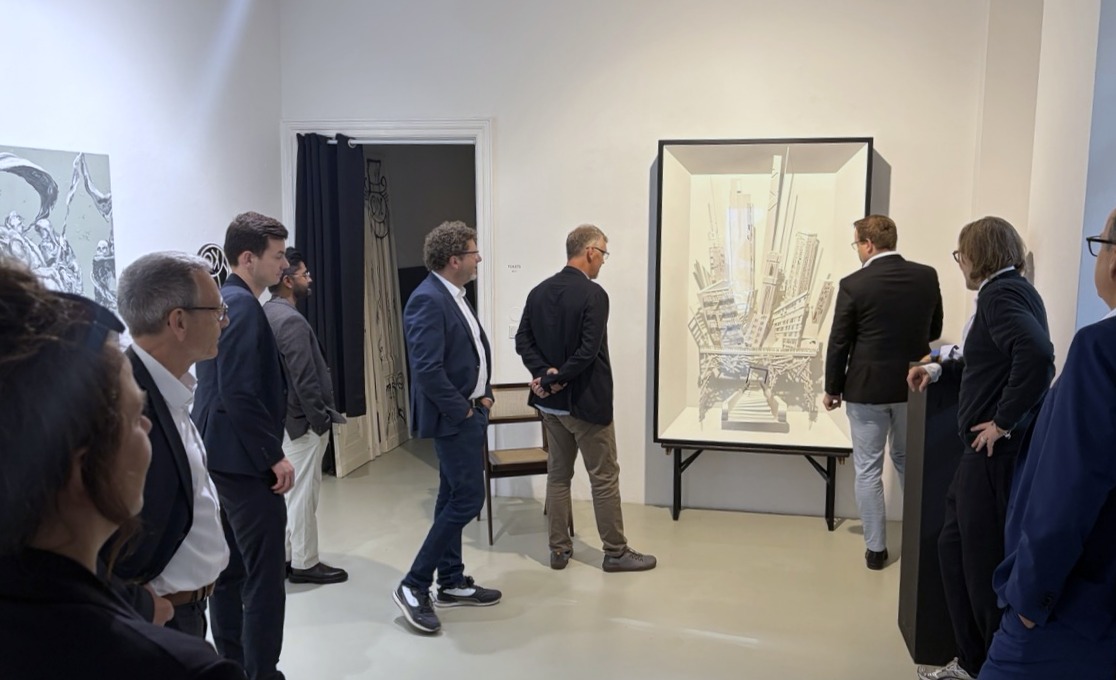
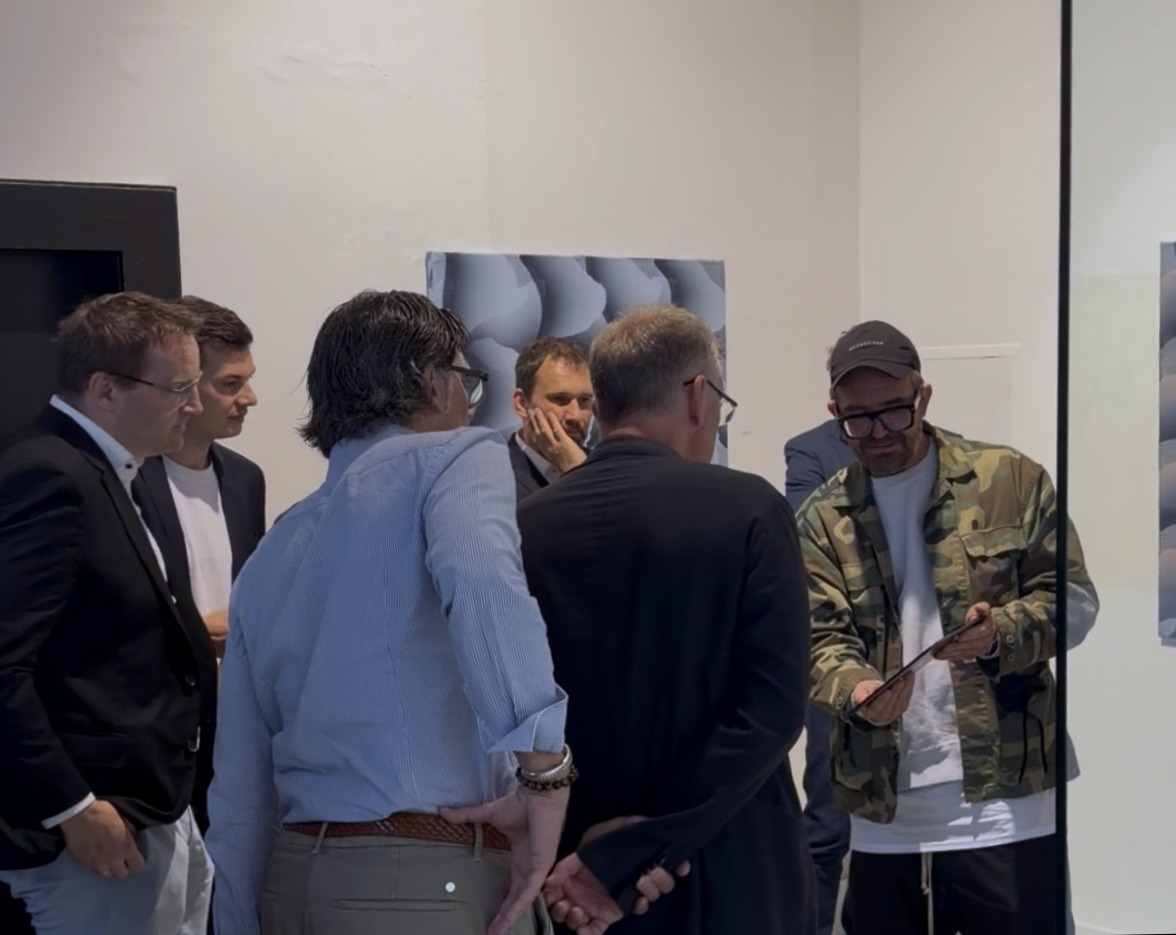
Recently, we welcomed a group of young collectors and entrepreneurs to Circle Culture Berlin for a conversation about art, artistic processes and the craftsmanship behind the works.
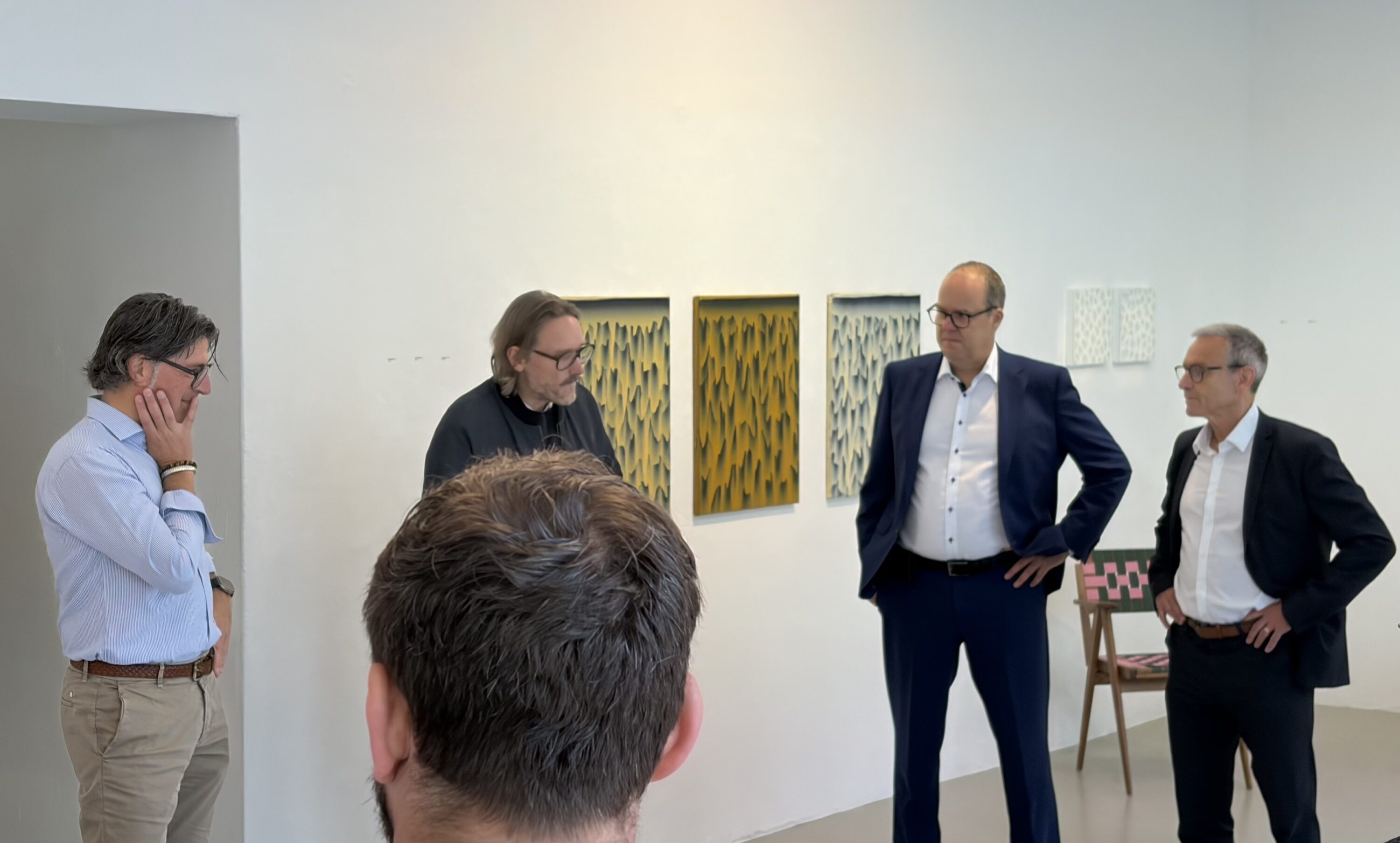
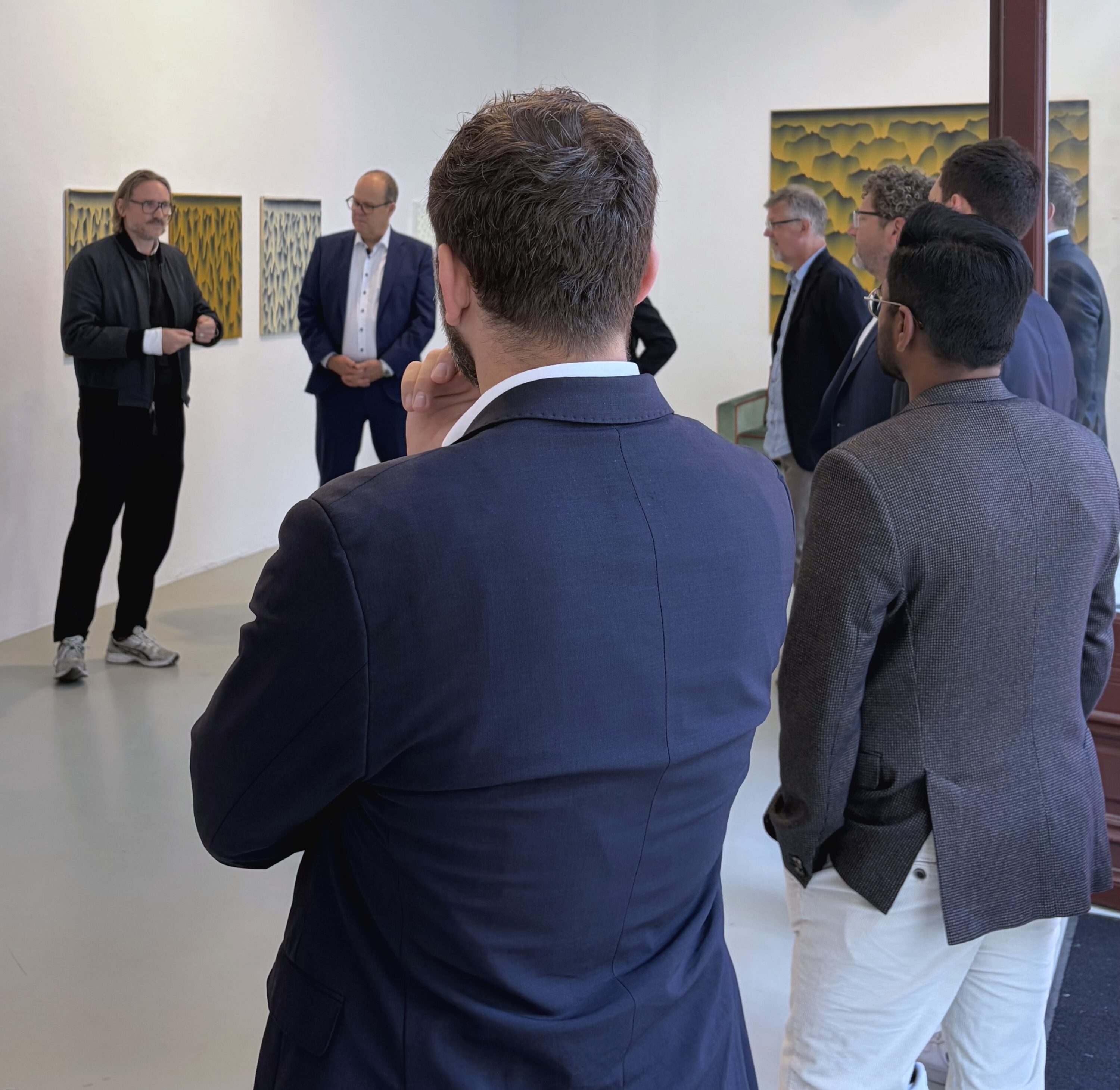
Berlin-based artist Marco Reichert joined us for the visit. Having studied both computer science and fine art, his practice provided a vivid starting point for discussing the relationship between human creativity and artificial intelligence.
His work raises a question that is becoming increasingly relevant across industries: how much can the machine do and where do human judgement and creativity remain essential?
“Julia’s essay connects closely with these ideas. She grew up with technology and now works intensively within that field, but came to us looking for its antidote: art as a way to enrich her life, her thinking and her perspective.
There is also something very human in the fact that she was introduced to us by André Saraiva, one of the first artists Circle Culture worked with. It is a connection that an AI-driven data system probably would not have made. At least, not yet.”
— Dirk Staudinger, Founder and CEO of Circle Culture
We believe that engaging with art has an important place within insight and strategy processes. It introduces new perspectives and non-linear thinking, while strengthening the cultural and social understanding that helps us navigate a rapidly changing world.
As artificial intelligence becomes increasingly capable of producing, optimising and replicating, the ability to recognise what is meaningful, relevant or culturally significant gains new value.
It is therefore telling that Silicon Valley, often an early indicator of wider cultural shifts, has begun to focus on something long considered almost the opposite of technology: taste.
Kyle Chayka explores this development in his recent New Yorker article, “Why Tech Bros Are Now Obsessed with Taste.”
This thinking also informs our Global Thinkers Network. Through studio visits, personal encounters, conversations and ongoing dialogue, we connect clients with artists, cultural protagonists and thinkers shaping the present.
The aim goes beyond collecting art. We want to offer a deeper understanding of what is emerging, what is culturally relevant and where meaningful conversations are developing.
As technology becomes increasingly present in our lives and work, this form of cultural orientation becomes all the more valuable to those who want to understand and participate in what comes next.