
Art and brands: once frowned upon, now celebrated.
When we started Circle Culture in 2001, we did something that, at the time, felt almost forbidden: we brought artists and brands together. As far as we know, we were one of the very first agencies to do so.
One of our early projects was the Nike Spirit Room, a platform where Nike gave artists the space and freedom to express themselves. Artists like Geoff McFetridge and Stephen “ESPO” Powers exhibited there and in return Nike presented its lifestyle products to exactly the community it wanted to reach. A healthy, harmonious give-and-take: Nike did something real for culture and became part of it in an authentic way.
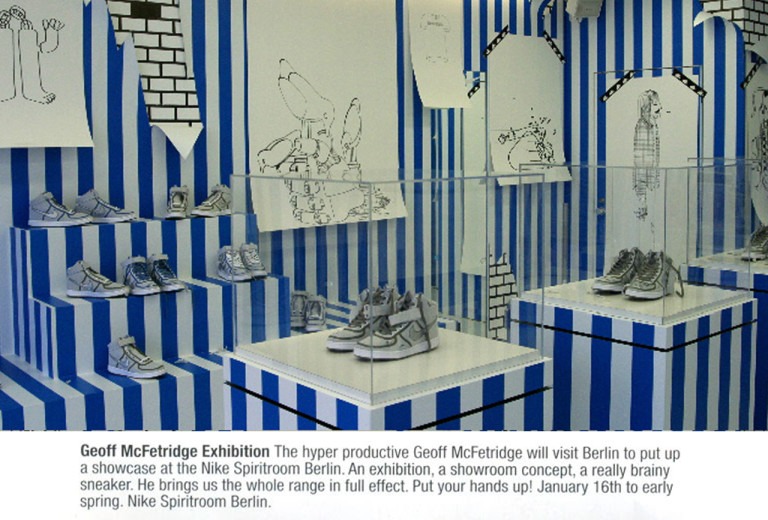
Circle Culture Consulting for Nike | Nike Spirit Room | 2001
Sounds obvious today? Back then, it wasn’t. The project was viewed very critically, internationally but especially here in Berlin. Art had to stay free, far away from any brand. When we applied for art fairs, we sometimes had to hide the fact that we were also an agency working for companies like Nike. Imagine that.
Looking back, this was also a very German phenomenon. In the US, museums have always relied on corporate partners. Only a fraction of their budgets comes from the state. In Germany, culture has traditionally been seen as a task of the state, with public funding covering around three quarters of institutional budgets. When you don’t need brands, you can afford to distrust them. Today, with public budgets shrinking and a new generation that thinks less in categories, Germany is catching up and, I believe, has learned something.
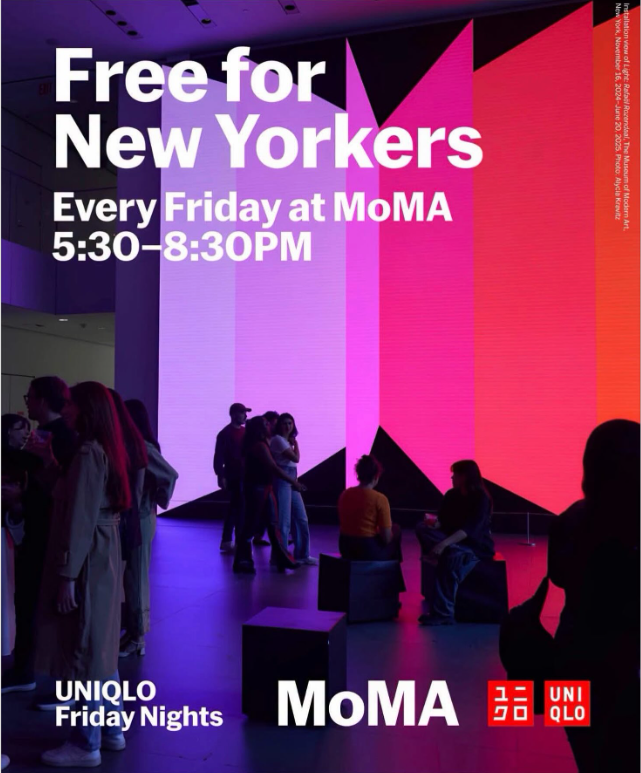
UNIQLO Free Friday Nights at MoMA, New York. The partnership began in 2013.
And what does the art and brand evolution look like?
At Art Basel Paris, in the Balcon d’Honneur of the Grand Palais, Louis Vuitton celebrated seven years of its Artycapucines project. Fourteen artists, among them blue-chip names like Takashi Murakami, Yayoi Kusama, Urs Fischer, Alex Israel, Henry Taylor and, in a new chapter, Keith Haring, reinterpreted the house’s iconic Capucines bag, its craft, its codes, its values. Right next to the bags, the original artworks that inspired them were on display. Twenty years ago, this would have been unthinkable. Today, it’s one of the biggest installations at the world’s most important art fair. For us, a déjà vu in the best possible way.
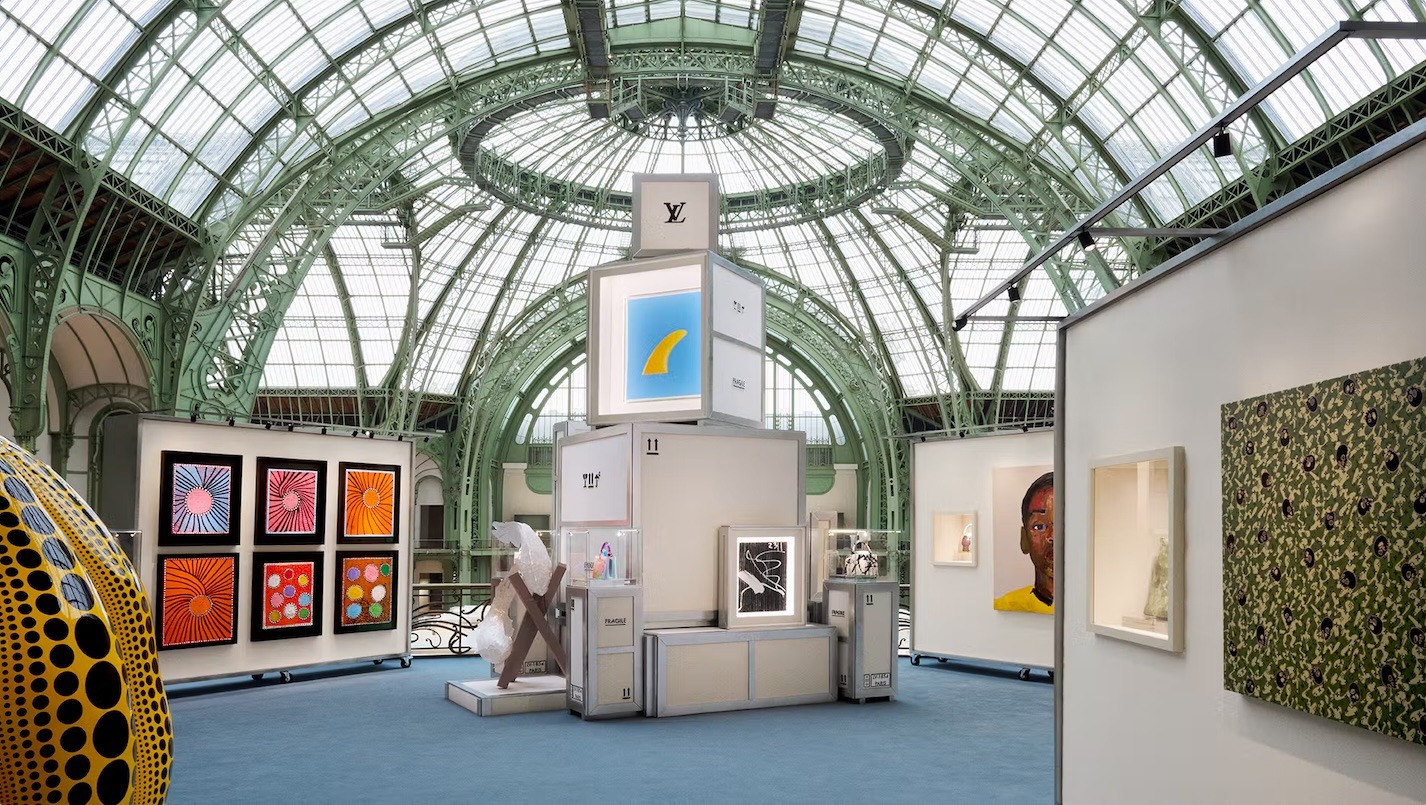
Louis Vuitton Artycapucines at Art Basel Paris, Grand Palais. Photo: Courtesy of Louis Vuitton.
And honestly, it’s nothing new. From the Medici to the great banking collections of the 20th century, art and business have always needed each other. What we’re seeing now is a return to a symbiosis that has always worked.
The next level: artists at the strategy table
But here’s what I really want to say. As beautiful as Artycapucines is, it’s still mostly corporate communication. Artists interpret a brand’s values and the brand tells that story. That’s great but it only uses a fraction of what artists can offer.
The real potential lies one level deeper: bringing artists into insight, research and strategic decision-making. Especially now, when more and more of our world is shaped by algorithms, AI and the binary logic of 0 and 1, the free, non-linear thinking of artists becomes incredibly valuable. Artists are trained to question what everyone else takes for granted.
This isn’t just a gut feeling. In the 1990s, Xerox PARC, the lab that gave us the graphical user interface, placed artists directly alongside its engineers. Its chief scientist, John Seely Brown, put it simply: “An ability to see something in a new way is key to art, but also key to breakthroughs in science.” A study by the WZB Berlin Social Science Center, covering more than 200 organisations, found that the most frequently documented effect of bringing artists into companies is a widening of perspectives, followed by more reflection and stronger collaboration. And research by Robert Root-Bernstein shows that Nobel Prize-winning scientists are almost three times as likely as their peers to have an artistic hobby. Creativity doesn’t stay in its lane.
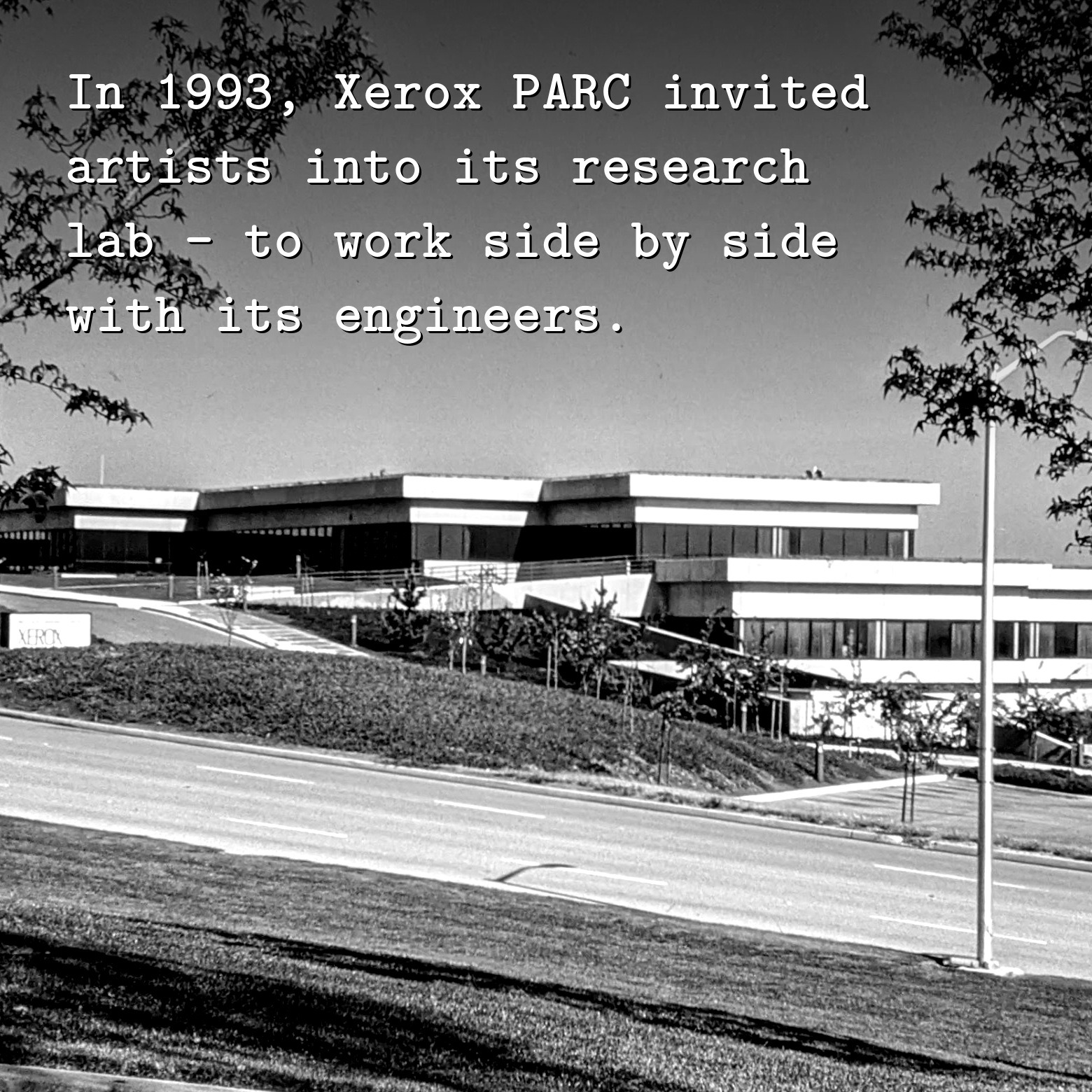
Photo: Courtesy of PARC / Xerox.
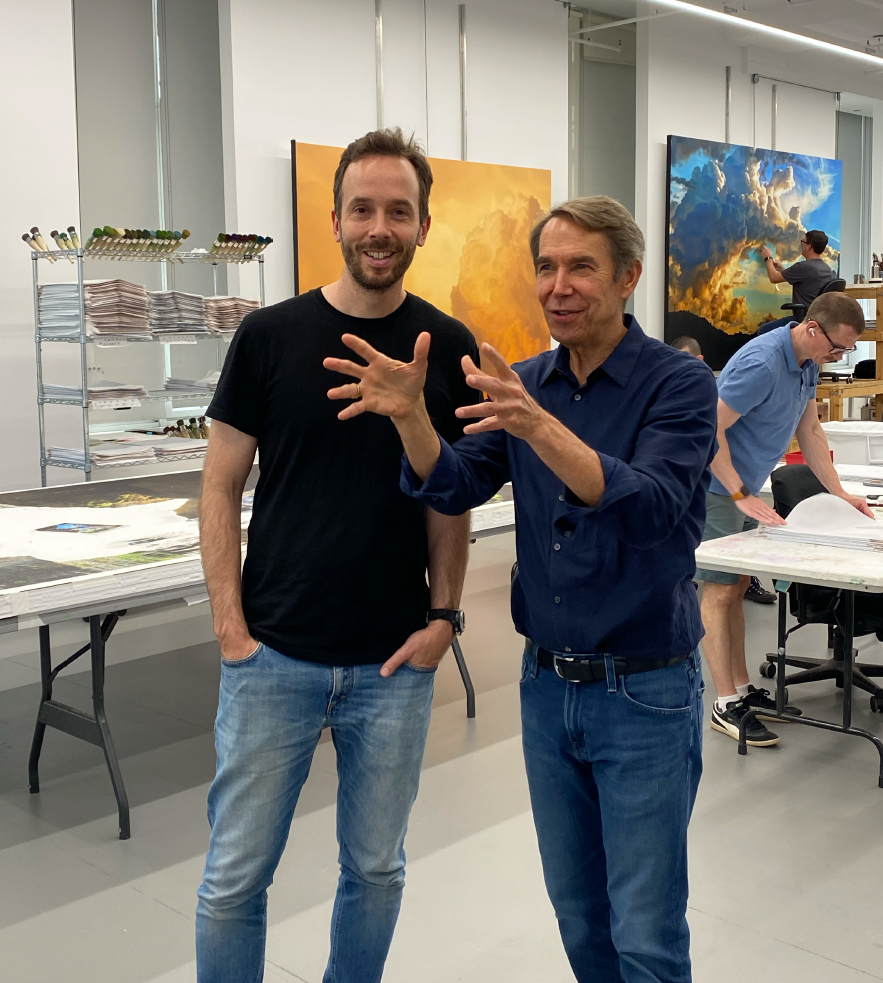
Think of the great blue-chip artists. For 30 or 40 years they have been thinking freely in their studios, untouched by corporate micropolitics, quarterly targets or hierarchy. At the same time, many of them sit at the table with some of the most interesting minds of our time. I experienced this myself during a studio visit with Jeff Koons. His collectors and collaborators range from philosophers and space scientists to some of the most powerful tech leaders in the world and you can feel how much he absorbs, reflects and connects. That’s why I keep asking a question that sums it all up:
Jeff Koons with Philipp Westermeyer, founder of the OMR Festival and the OMR Podcast.
What would Jeff Koons say about my logistics problem?
It sounds absurd. But if more entrepreneurs dared to ask that question, a lot of decisions would look very different.
It has to be done right
Of course, not every artist fits every company. The magic only happens when the match is right and when the process is guided well. It takes careful curation to find the right artist, strong moderation to bring both worlds into a real dialogue and a well-designed questionnaire to draw out exactly the insights that matter for the business. Done this way, the artist is not a decoration but a true strategic sparring partner.
That’s exactly why we founded Circle Culture Art Collaborations. As a gallery and as brand strategists, we speak both languages. We bring artists into companies, not only to create products but to join insight teams, challenge assumptions and bring new thinking into corporate processes.
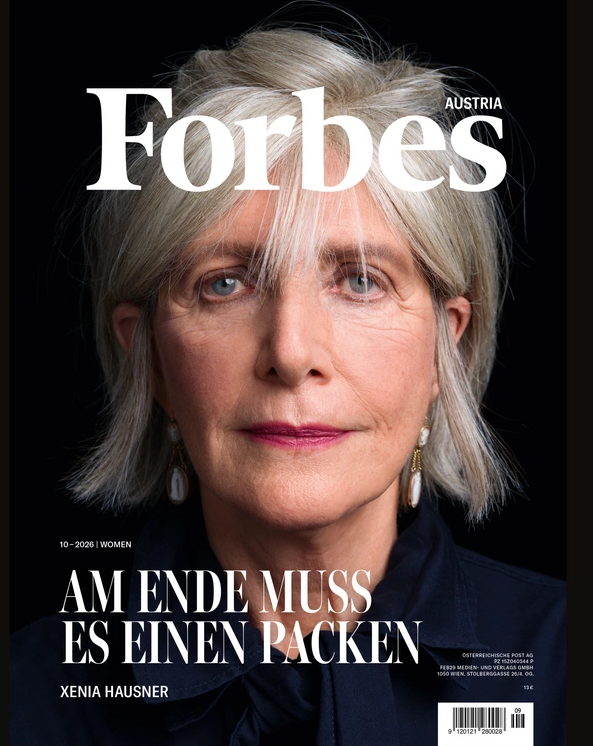
Xenia Hausner on the cover of Forbes Austria’s October “Women” issue.
The October “Women” issue of Forbes Austria puts the painter Xenia Hausner on its cover, under the headline “Am Ende muss es einen packen” (“In the end, it has to grab you”). An artist on the cover of a business magazine. The first signs are here.