By Dirk Staudinger, CEO and Co-Founder of Circle Culture.
For many years, the art world has had its familiar power rankings, from ArtReview’s Power 100 to Monopol’s Top 100. The names on them rarely surprise us: museum directors, star curators, blue-chip galleries and the top ten artists of the moment. All well deserved, yet often a little predictable.
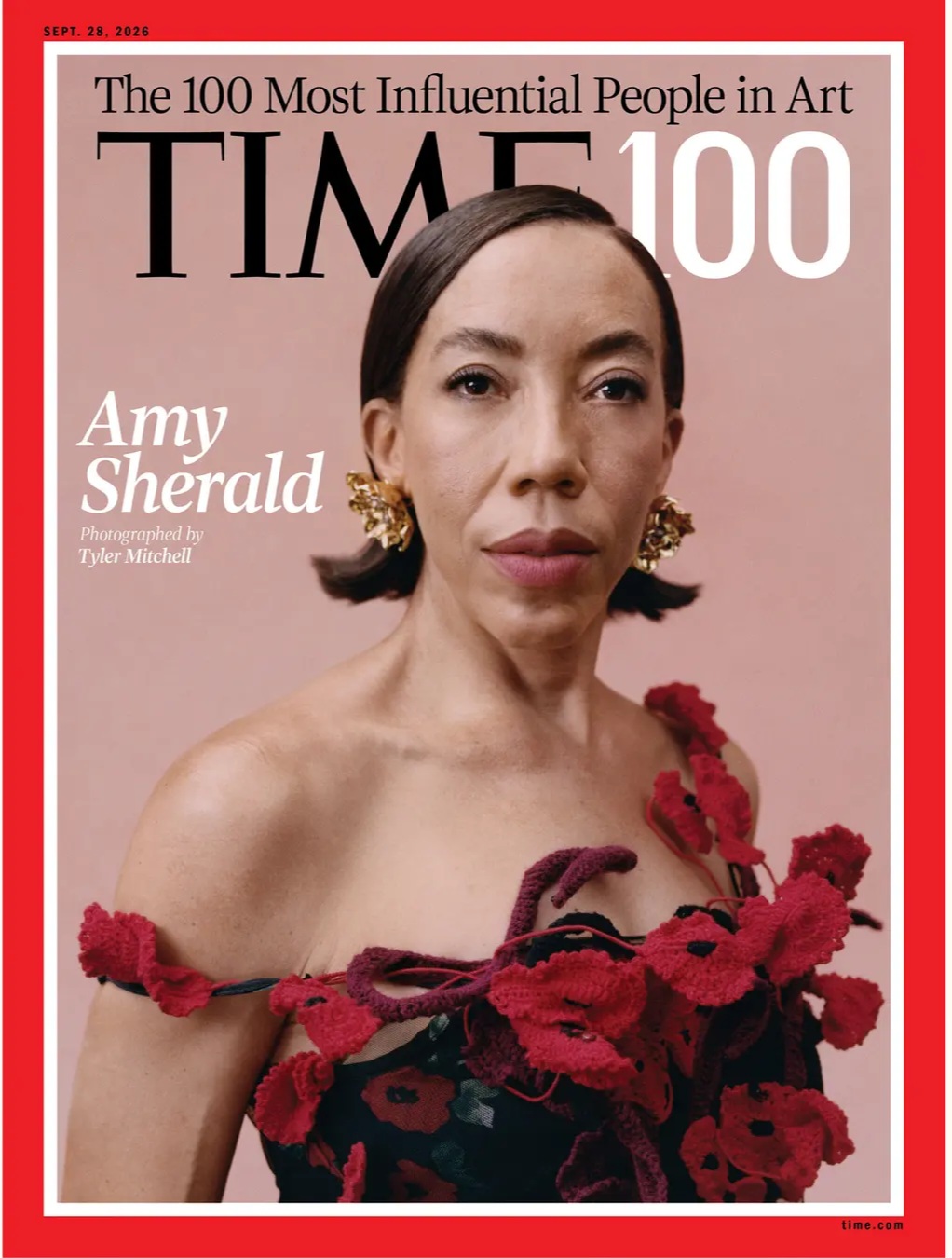
That TIME, not an art magazine but one of the world’s leading voices on politics and society, has published a TIME100 Art list for the very first time is a signal in itself. It reflects a rising trend we have been observing for some time: the growing importance of contemporary culture and of art as an antidote to the artificial. In a world increasingly shaped by AI, algorithms and synthetic content, art reminds us of what is genuinely human, and society is beginning to pay attention.
TIME has chosen a perspective that feels very close to our own. Of course, giants like Gerhard Richter, Wolfgang Tillmans and Amy Sherald are part of it. But half of the people on the list are not artists at all. They are the ones who make art possible, often in completely new ways, and who build bridges between art and other segments of society. This is exactly where new thinking and new habits happen.
It makes us especially proud to see three pioneers of urban and street art on the list: Banksy, JR and KAWS. We started working with all three and had projects with them at a time when they were still largely unknown.
Seeing them now among the most influential people in art confirms what we have always believed: sustainability and long-term commitment pay off. “Think in decades, not in viral moments,” as my intergenerational partner at Vertical, Ludwig, always says.
Joe Hage, manager of Damien Hirst and Peter Doig, no longer works like a traditional gallery but as a strategic adviser at the artists’ side. Advisers like him are becoming more common in the market. Still, we are convinced that the gallery model offers something a manager cannot. While a manager works for one or two artists, much like a sports agent, a gallery can act from a more neutral, broader and ultimately stronger position, guiding careers with a curatorial vision rather than just a contract.
291 Agency by Max Teicher connects artists with entertainment and media companies, global brands and sports stars. This fusion of segments is something we have always believed in and have been putting into practice for five years with our own unit, Circle Culture Art Collaborations.
Vanessa Horabuena paints large-scale portraits live in front of crowds in as little as ten minutes. One of them sold for $2.75 million at a charity auction. Is it more entertainment than fine art? Probably. But her skills are extraordinary, and she does it all in public, where kids can watch and get inspired. We like that because most art processes are still hidden and feel elite. She opens that process up to everyone.
Susan Freedman has dedicated decades to bringing art into New York’s public spaces. Art is always an impulse for new thoughts. When we truly engage with it, we begin to reflect and something is set free.
Jennifer Rubio, co-founder of Away, and her husband Stewart Butterfield, co-founder and former CEO of Slack, bring the wealth they have built back into art and artists. Patrons like them are essential for culture, and their presence on this list sends an important signal to the tech world: engage with art. It opens your eyes and moves you forward intellectually as well as emotionally.
Diya Vij has spent years asking what artists need to survive and to dream big. At Creative Time, she commissioned public art and launched a fellowship for politically engaged artists. Today, as New York City’s Commissioner of Cultural Affairs, she is building the infrastructure to sustain artists on a much larger scale.
Together with SAUT Creation, we have just completed The Looking Glass Self, a project supporting a young collective of creatives who give emerging artists a platform. These are artists who would otherwise have little chance to exhibit at a time when fewer and fewer galleries have the courage to take that risk. This is the kind of courage we want to stand for.
Since founding Circle Culture, we have understood art not as a closed system but as a way of thinking. That is why we bring artists into our brand strategy work, research projects and hospitality concepts, and into the decision-making processes of major companies. Their free, non-linear thinking is more valuable than ever in a world shaped by algorithms and efficiency.
The TIME100 Art shows that the art world is opening up and becoming more permeable, more diverse and more courageous. We love to see that and we look forward to much more of it.