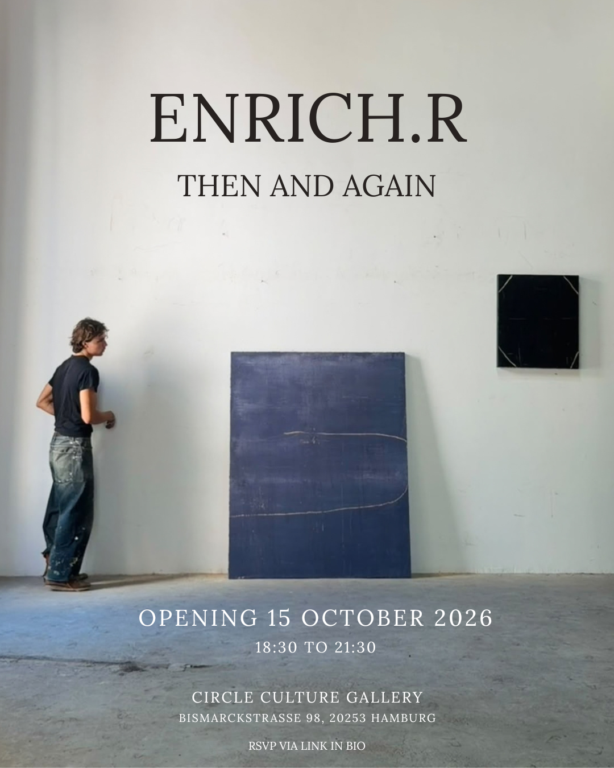
THEN AND AGAIN
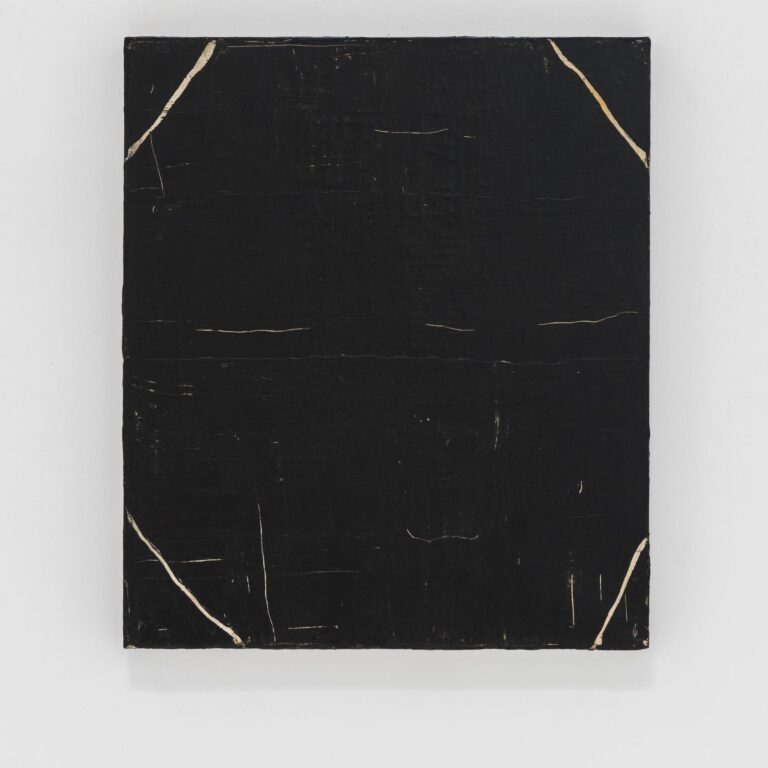
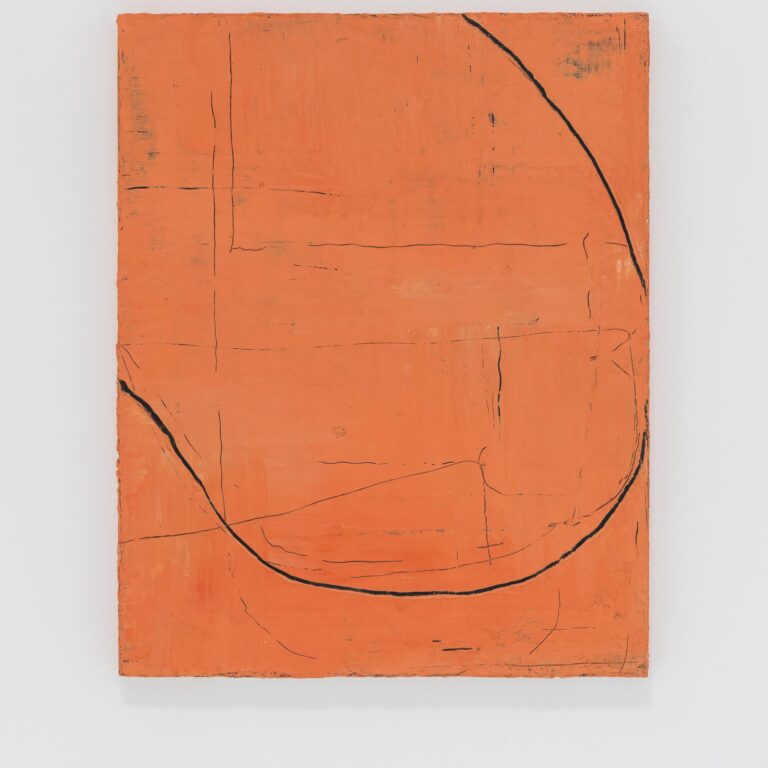
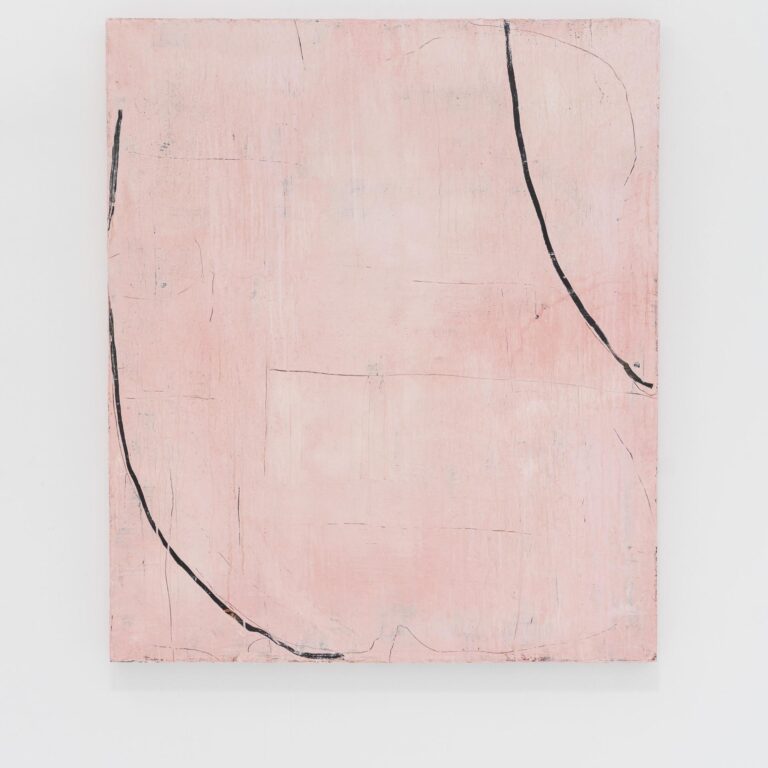
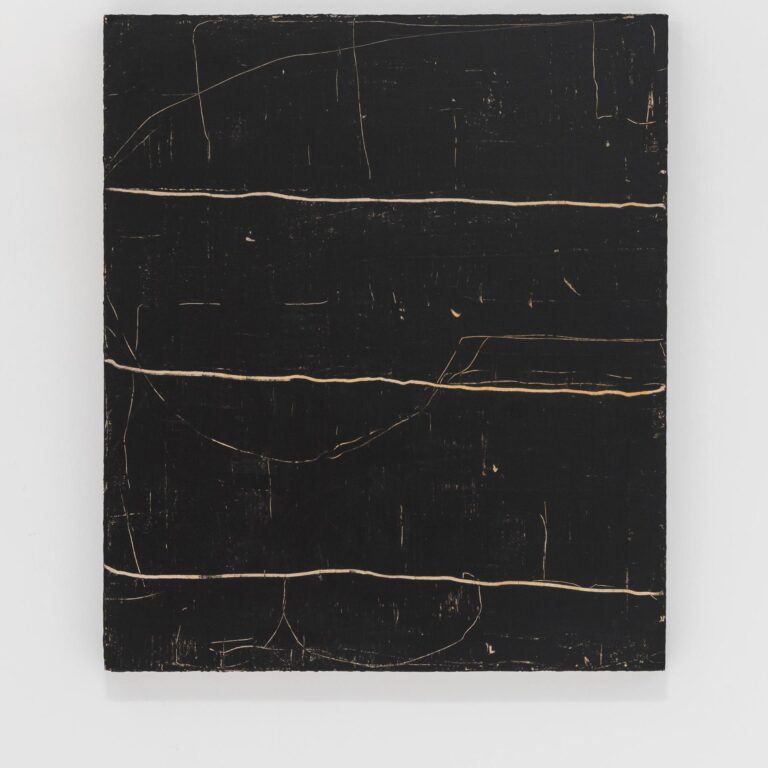
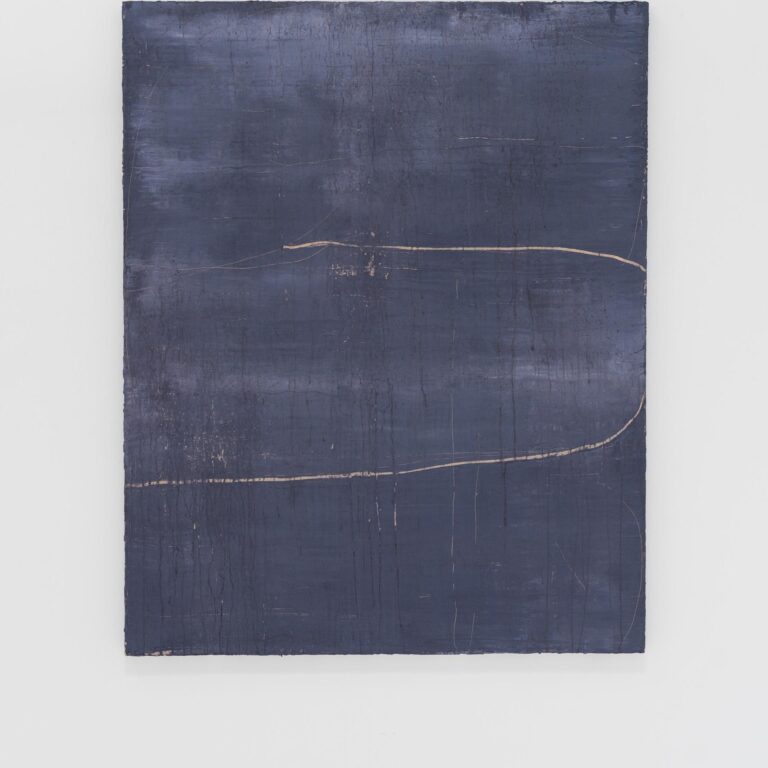
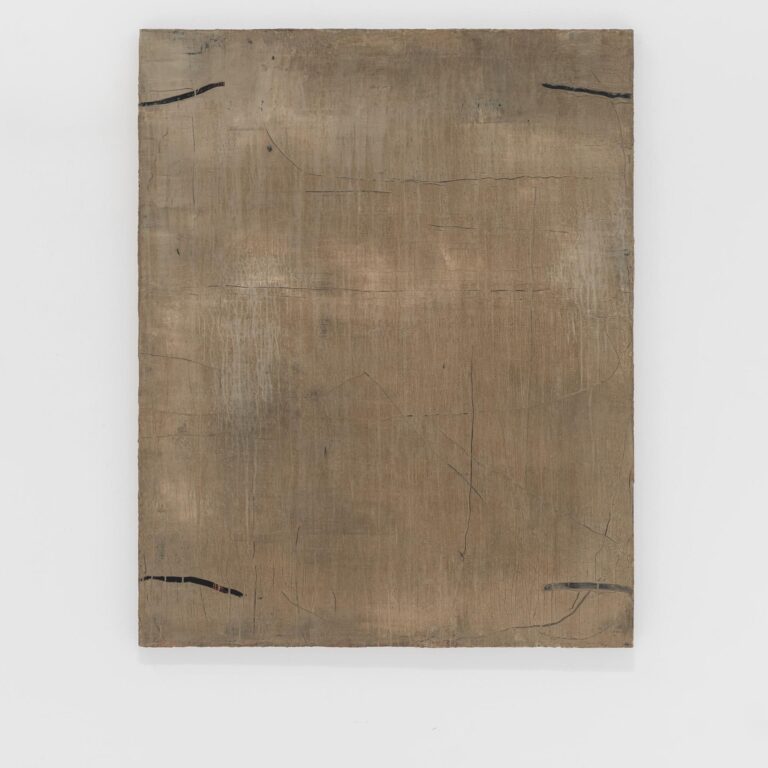
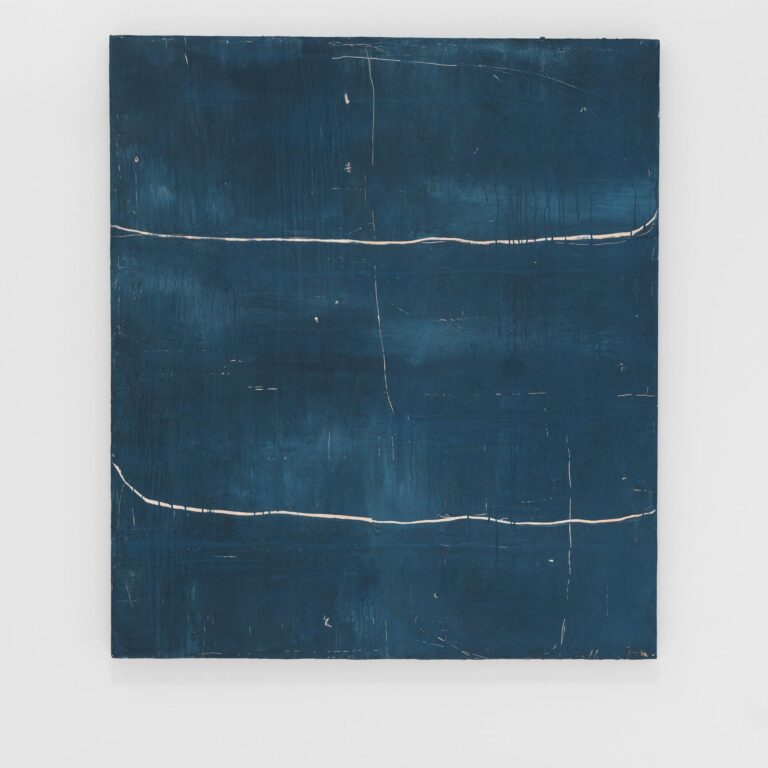
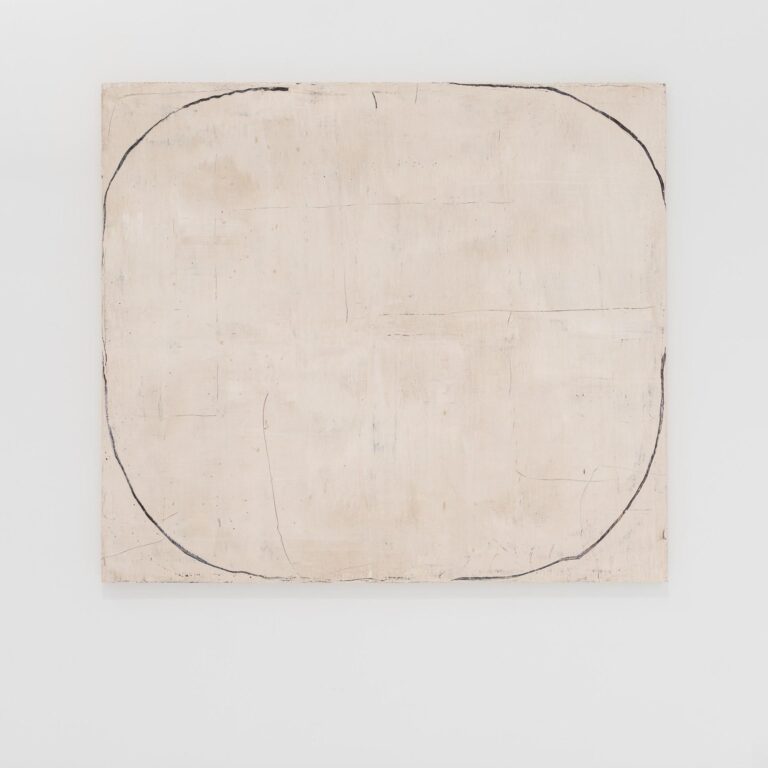
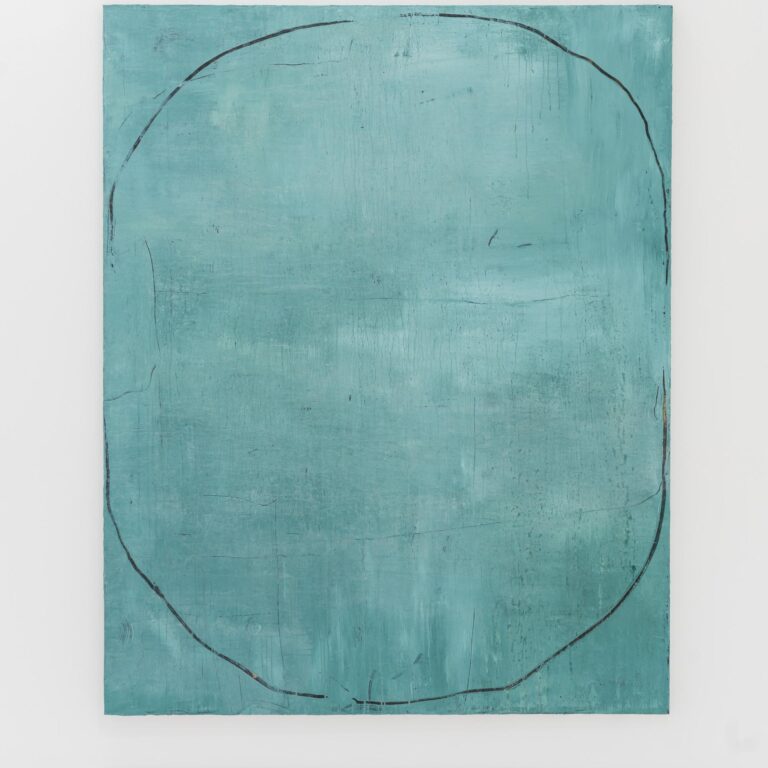
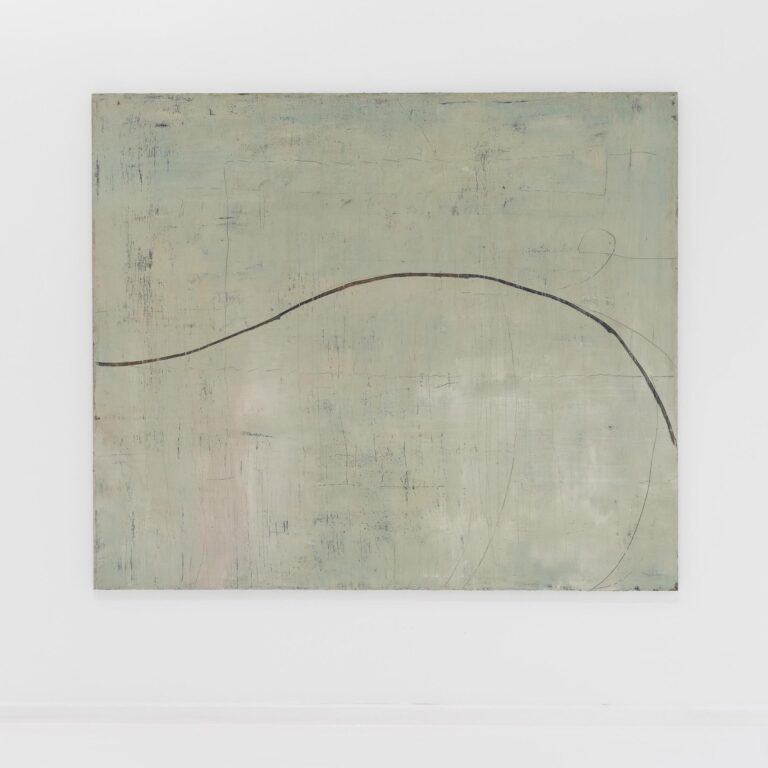
Enrich.R’s recent paintings are defined by the tension between large fields of colour and the increasingly spare lines that move across them. Some curve around the edges of the canvas, others divide or hold a space in place. Their apparent simplicity comes at the end of a much slower process. The surfaces beneath them have been built up, worked back and altered over time, leaving scratches, shifts in tone and traces of earlier decisions visible within the final image.
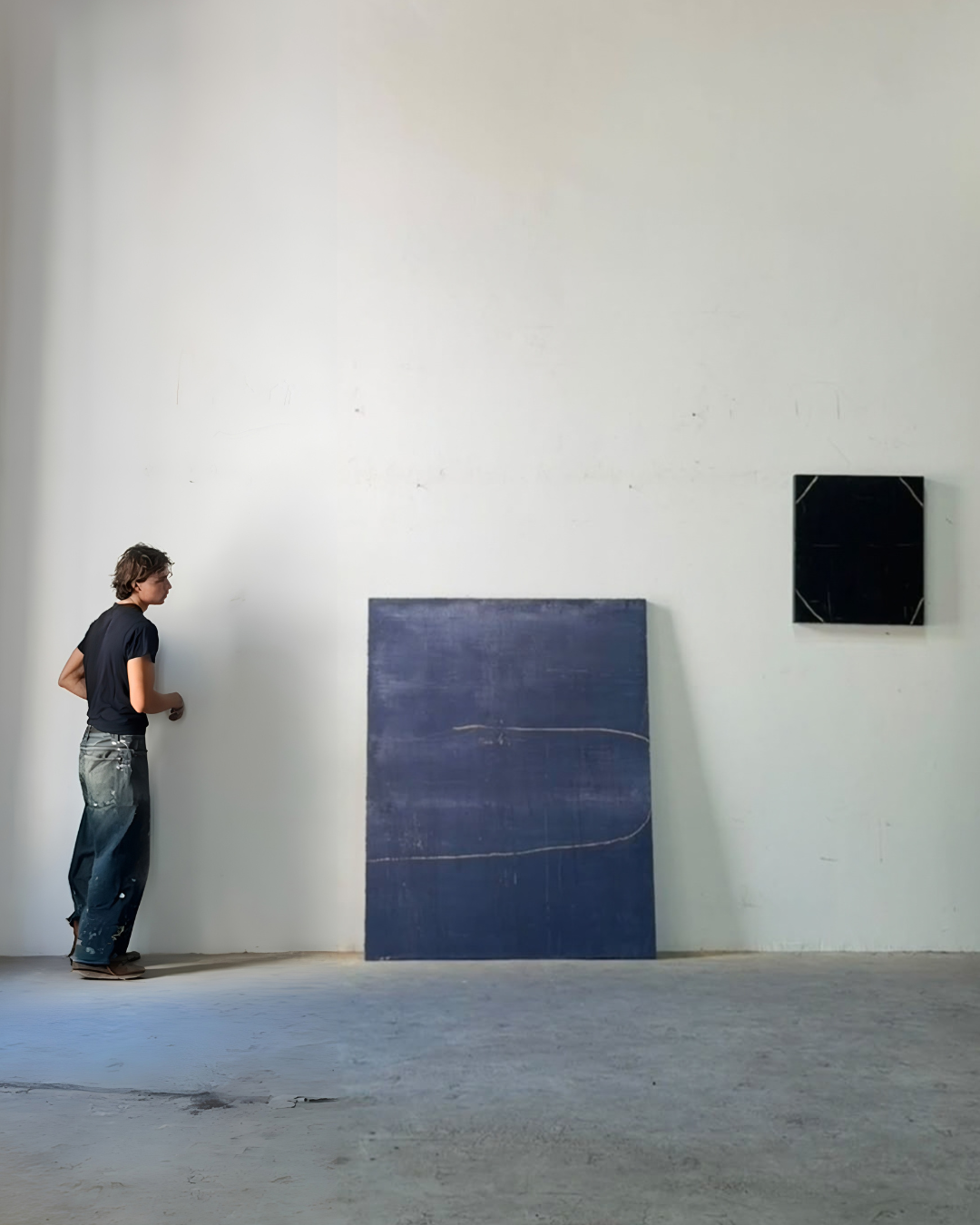
Born in Igualada in 2001, Enrich.R continues to live and work there in a former factory in one of the city’s oldest industrial areas. The surrounding buildings have gradually lost their original functions and carry the marks of age and repeated use. For Enrich.R, they are places where memory seems embedded in the material itself.
This relationship to surface and place connects his work to a broader Catalan tradition of abstraction, where landscape is often absorbed into material, rhythm and colour rather than represented directly. His paintings can be read within a lineage that stretches from the materially charged surfaces of Antoni Tàpies to the distilled spatial language of Joan Hernández Pijuan. He brings this inheritance into a distinctly contemporary practice, one that is less concerned with depicting place than with understanding how a lived experience can settle into a physical surface.
Lines have become increasingly central to that language. He sees them as a form of abstract writing, reducing language until it becomes a gesture. Over the course of making a painting, conscious and intuitive decisions accumulate until the canvas takes on the character of a lived surface. The large drawings he makes with water on exterior walls in Igualada are part of the same process. They disappear again in the heat, forcing a certain decisiveness while sharpening his memory of the image once it is gone.
The works in THEN AND AGAIN were created both before and after a recent journey to Kenya. During the journey, Enrich.R spent time with members of a Maasai community and was particularly struck by the intimacy of their knowledge of the land around them. Their understanding of land, resources and materials resonated with the way he comes to know the surfaces of his own paintings through repeated attention and use. The encounter did not suddenly change the appearance of his paintings. Instead, it gave him distance from what he had already been making and allowed him to return with a more critical eye. It also made him more attentive to unexpected colour relationships and to the way seemingly accidental combinations can acquire their own symbolic weight.
The most direct trace of the journey appears in the titles. Enrich.R collected words that stayed with him through their sound, use or association, including words from Maa, the language of the Maasai, and later gave them to the works in the exhibition. As some of those paintings had already been completed before he left for Kenya, the titles connect different moments in the development of the exhibition and allow later experiences to enter works that already existed.
Their function is not primarily descriptive. In some cases, the literal meaning of a word has become secondary to the sound and memory he associates with a particular work. Colour works in a similarly intuitive way. Enrich.R paints works alongside one another, gradually removing ideas or colours that no longer belong to the overall rhythm and atmosphere of the exhibition. A pale surface can sit beside deep blue, black, pink or orange because each work develops through its own logic while remaining part of the whole.
THEN AND AGAIN brings these different moments together without forcing them into a clear before and after. The exhibition is held together instead by recurrence: lines, colours, places and words return in altered contexts and gather new associations over time.
“Language isn’t everything, but communication is.”