
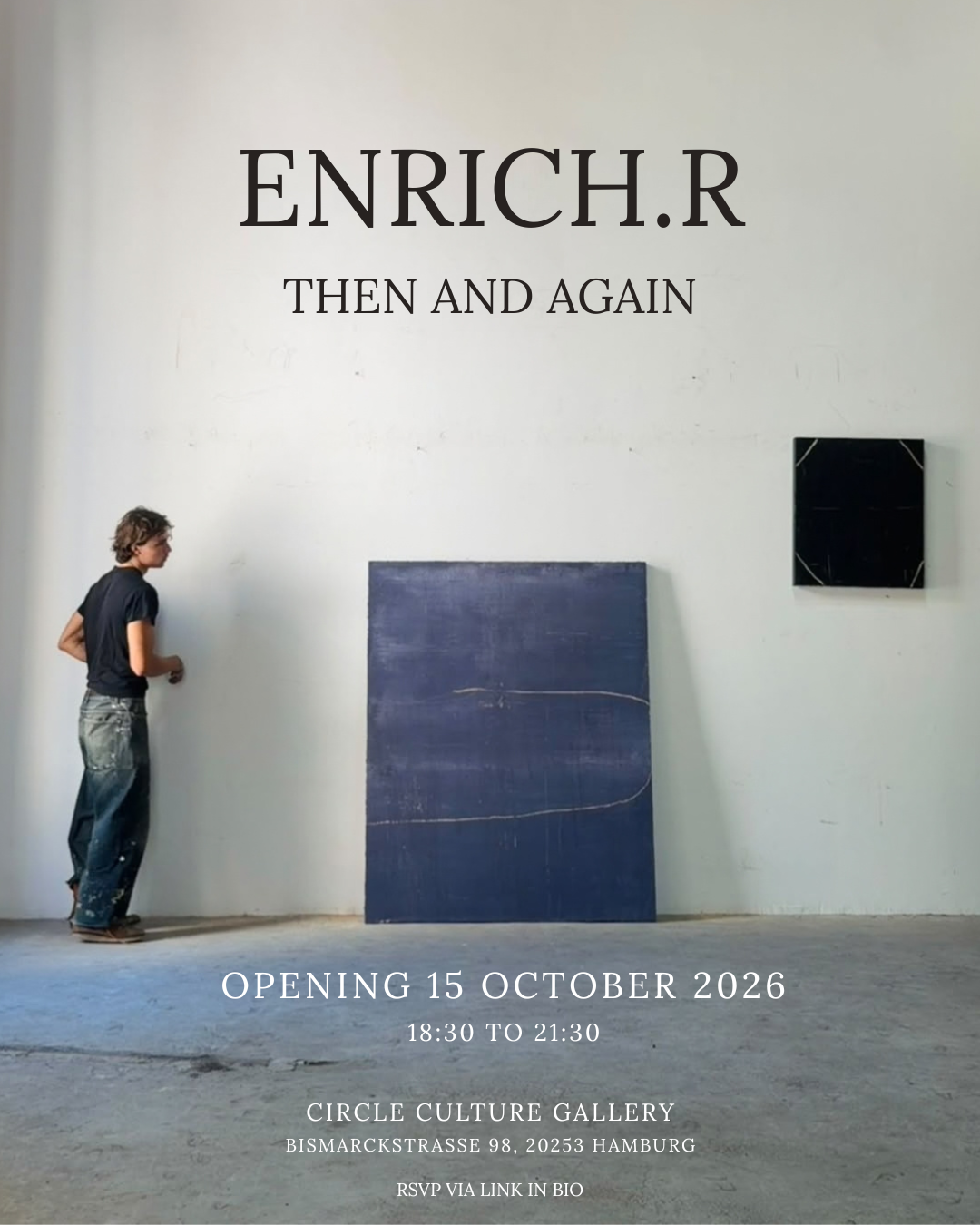
Places seem to enter your work quite indirectly. Rather than depicting a specific landscape or architecture, you often seem to retain things like colour, surface, light or a particular material quality. What tends to stay with you from a place once you return to the studio?
The motifs in my paintings have always had multiple origins, and they do not seek to represent anything beyond painting itself. They are abstract. Even so, there is always a psychological factor that emerges when I work that gives me instructions on how the painting needs to be done.My attitude can change a lot depending on the colour I have in front of me, as well as the surface and the size. Those are the elements that serve as a starting point.
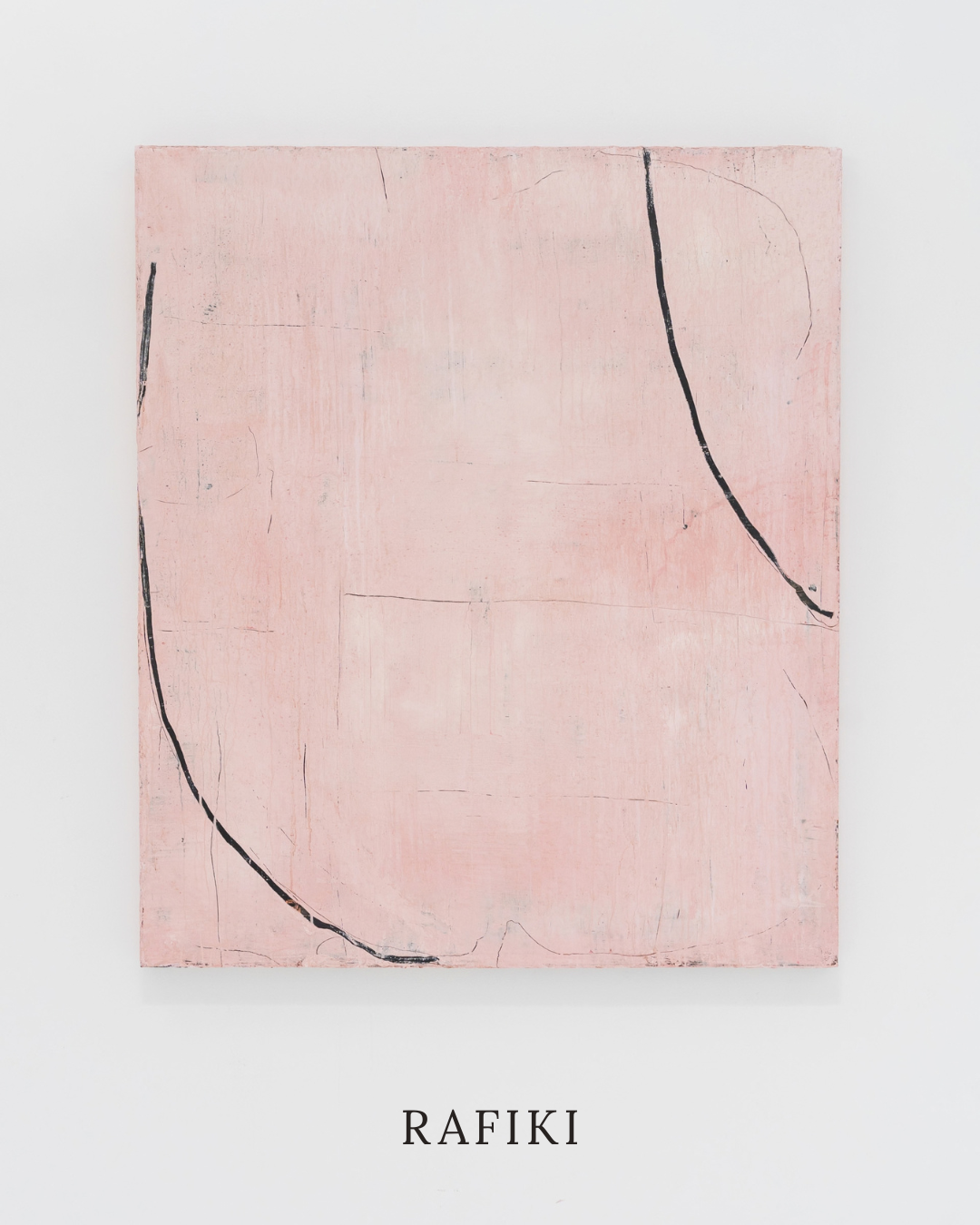
Lines have become increasingly present in your recent paintings. Where do these lines come from for you, and what are you looking for when you place such a simple gesture onto a large surface?
For me, the line helps me fill a void and makes a space inhabited in an evident and decisive way. It is also part of a kind of abstract writing that simplifies words and transforms them into a gesture. Many times, the reduction of this language makes me feel vertigo and corners me, but I also know that this is where the best beginning can be found. An unknown reaction of mine that becomes a motif that not even I can discover. Over the hours of work, the painting gains autonomy and absorbs the energy of many decisions made consciously or unconsciously, turning a canvas into a lived surface.
You often draw directly onto large walls with water, knowing that the image will disappear again as it dries in the sun. What interests you about making a gesture that is temporary, and what has that practice taught you about painting?
Water is a material with a lot of possibilities, and I tend to need it inside and outside the studio. It is more unpredictable and uncontrollable than paint; it always surprises me when I draw with it. Perhaps the size of the drawings on the wall has helped me lose my fear and be decisive when I create an image, and the fact that it disappears has taught me to remember it clearly.
You work in and around Igualada, where heat, dry landscapes, old industrial buildings and stone boundaries are part of your everyday environment. How conscious are you of those surroundings when you paint, and what do you think they have given your visual language?
One is not aware of many things while working and can only see them once one takes a step back. Maybe it was later that I realised the importance my neighbourhood and studio have had in my painting. I work and live in a factory in one of the oldest areas of Igualada, a place full of factories that lost their function and left behind buildings full of memory, which time has gradually deteriorated. I think there is something very poetic about this scenario.
Earlier this year you travelled to Kenya, where an encounter with members of the Maasai community and the landscape around them had a strong impact on you. Some of the works in this exhibition were made before that journey and some afterwards. When you now see them together, what connects them for you?
My work has not changed much after the trip to Kenya. Perhaps it did help me simplify and find a reason to finish the exhibition. It is very difficult to impose a landscape like that immediately. What I did take from there are the titles of the works.
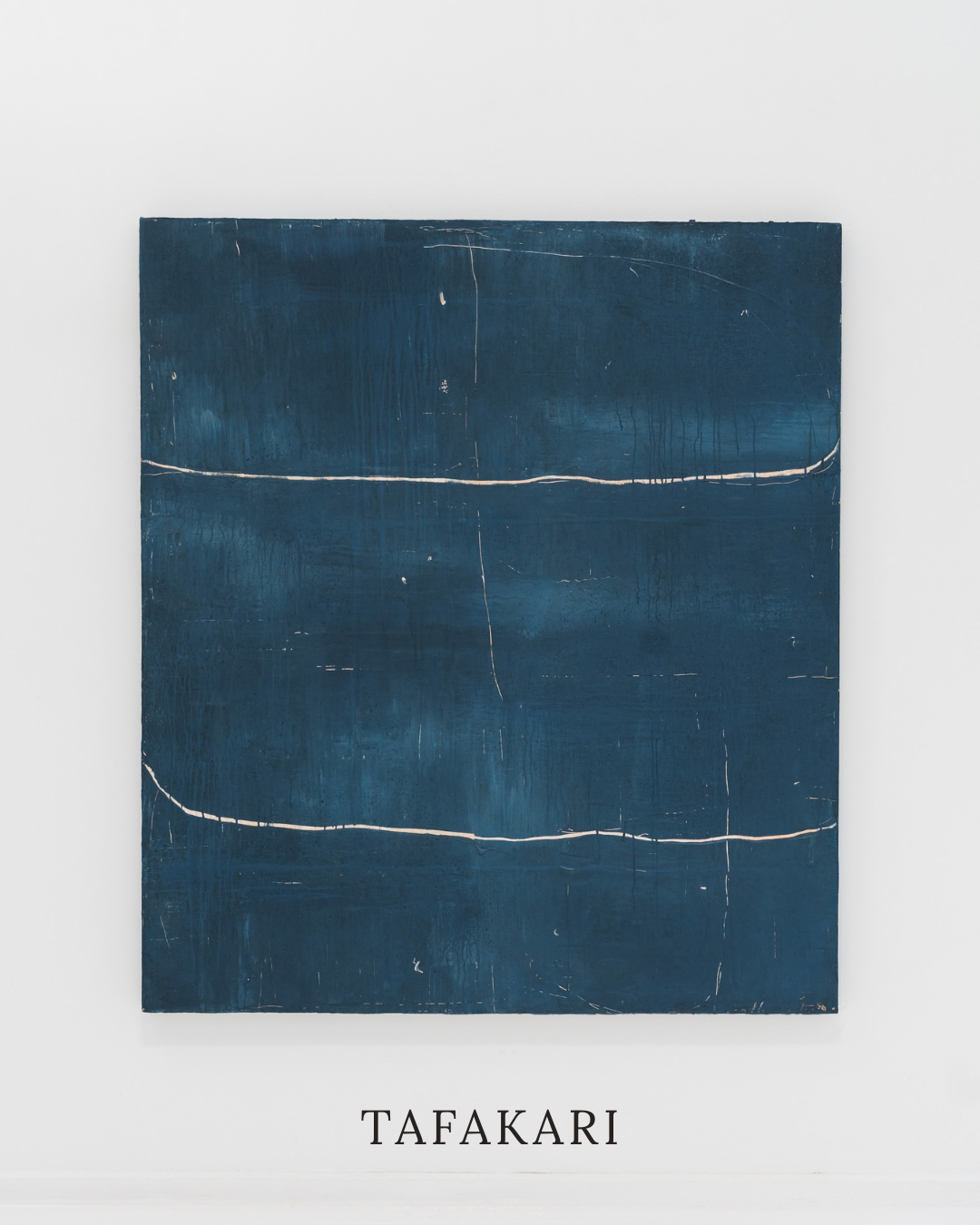
You spoke about being struck by the way the people you met knew and understood their land, and feeling a connection to the way you know the surfaces and spaces you work on yourself. What was it about that encounter that stayed with you?
People have a very strong control over the environment in which they live, and more developed senses. No one can escape their roots, and perhaps they have them more present in their everyday lives. Many of them work by hand; they are very resourceful and free, capable of giving several lives to the same thing through different logics.
Do you feel that travelling or encountering a new place can add something to your work without necessarily producing an immediate or visible change in the paintings? What did this particular journey add to the way you think about your practice?
Yes, because hopefully, things that happen to you take you away from what you were painting, and you return with a renewed perspective that helps you have a more critical sense of the work. In Kenya I saw that sometimes the most random colour harmony can be the most symbolic and distinctive.
Could you tell us where the individual titles come from and what the words mean? How important is the literal meaning to you compared with the sound of the word or the feeling and memory you associate with it?
Language isn’t everything, but communication is, and even though I could not understand anything, I felt welcomed. I gathered all those words that seemed useful to me, words that share their everyday life and mine, and somehow I felt that this completed the exhibition. Perhaps I no longer remember the literal meaning of some of them, but I do associate their sound directly with the work. Reflex, path, fire… are some of the words.
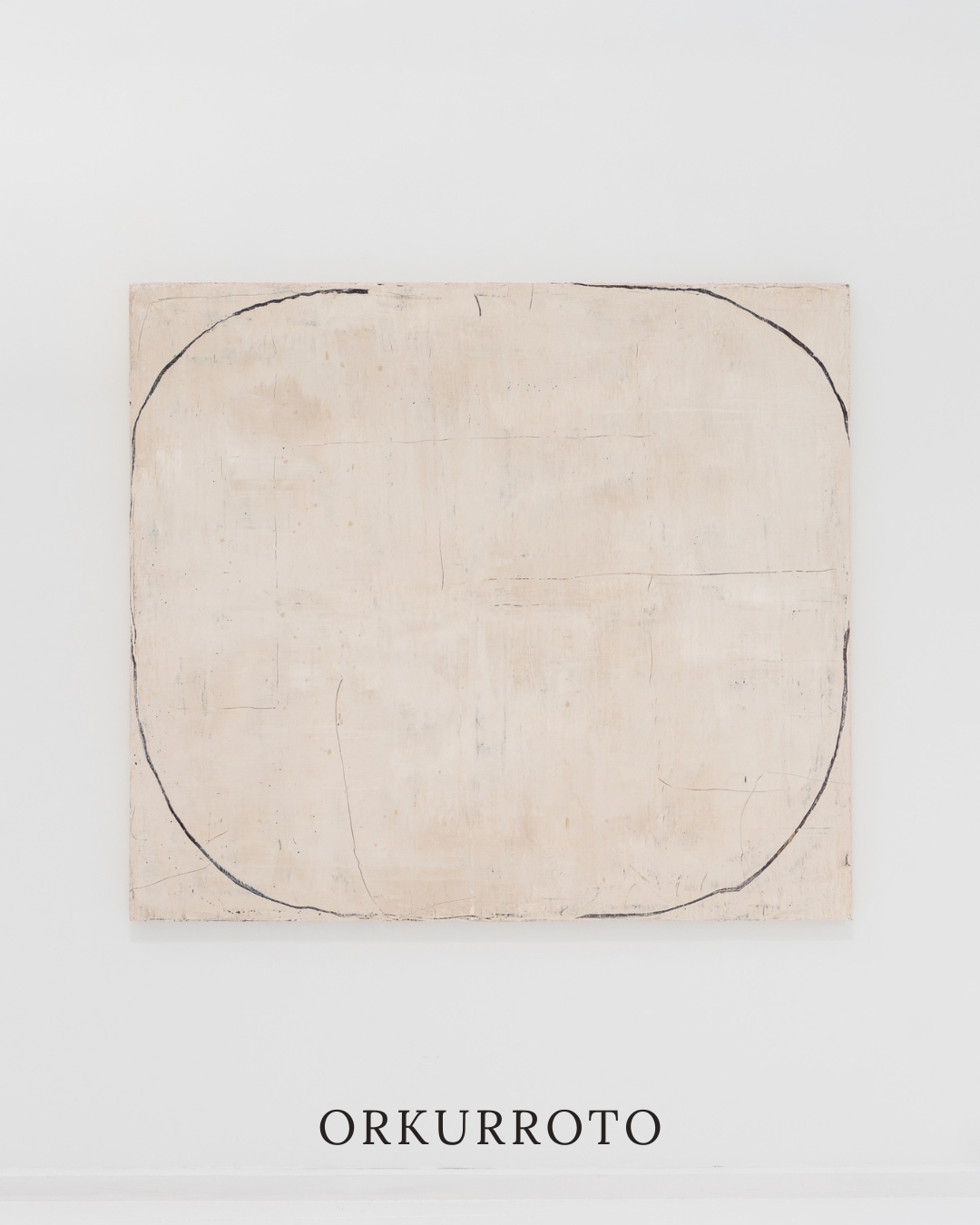
The works in this exhibition move through very different colours, from pale and earthy tones to deep blue, black, pink and orange. How do you arrive at a colour, and how much can a colour carry the memory of a particular place or experience for you?
As I have been painting, I have discarded ideas and colours that did not fit with the sonority of the exhibition. Being able to paint one work next to another has helped me to understand clearly whether they work together as a whole.
Every colour has its own lived history, and perhaps its treatment allows a pink to coexist with a blue. This exhibition does not aim to demonstrate a chromatic range, colour is abstraction, colour is abstraction.